AI will design all architecture.
AI is generating competition boards, testing materials and drawing architectural sections — and it's getting hard to ignore for Architecture and Interior design.

Shaun McCallum
May 4, 2026Okay maybe that’s a bit of a stretch — but hopefully it caught your attention. Because GPT-Image-2 is creating pretty solid competition boards, imagining plans, architectural details, testing materials and drawing solid architectural sections.
Don’t let the fact that it doesn’t represent things 100% fool you into thinking it’s useless. It’s getting more accurate, and Fenestra is becoming a stronger co-designer day by day — whether you’re working on exterior projects or interior architecture, it can help you do the lot.
The Experiment: Designing a Tokyo Residence With AI
Inspired by the grids of Tokyo and the back streets of Omotesando and Harajuku, I’ve been exploring a similar typology - using GPT-Image-2 and Flux 2 Pro to design through iteration, then using it to comprehensively draw up competition boards.
Right now it’s for fun. But there is definitely a future where these models and workflows help architects document quicker, nail interior layouts and materials faster, and assist throughout the entire design process.
Remember. This is not a replacement, but a assistant designer who can help you execute and ideate with precision.
The Workflow: From Prompt to Competition Board
Combine actual site photography, inspiration images and a prompt to bring your ideas to life. Once you’ve nailed the initial geometry and idea, work through multiple views, material studies, day/night visualisations — and lastly, lock in the competition proposal.
I’m designing with Fenestra here, starting purely with prompts and using Flux 2 Pro.
Step 1: Generate the Base Image
My simple starting prompt:
“home, modern white tile Tokyo in the evening Omotesando location, modern architecture, formal and geometric, bright early morning, warm sun light scene, exterior architecture photograph”
I ran it a couple of times to get what I wanted.
I also had a photo of a location in Omotesando I wanted to replicate the camera angle from, so I added that image and prompted:
“rotate the camera to match a similar perspective”
I tested a few formal ideas — “add a chamfered edge and pitched roof” and “make the windows arched with an arched rooftop” — but none fit the vibe I was going for. After a few edits, I landed on the one.
Step 2: Test Materials and Form
Exploring Tokyo as an architect is like exploring tiles and texture — reflective, rough, masonry, stacked, sometimes colour, sometimes white.
Using simple prompts across Flux 2 Pro and GPT-Image-2, I tested:
“try a tiny vertical forest green tile”
“try a vertical fluted salmon tile”
I can’t stress this enough — keep your prompts simple. LLMs will tell you long-winded prompts are best. They’re not. Especially for editing.
Step 3: Generate the Competition Board
Once you’ve decided on a form, time of day and finish, try this prompt in GPT-Image-2 edit mode:
“create a layout detailing this architecture with the main hero image at the top and under with plans, sections and elevations of the project with key call outs for specific details on the architecture”
Adapt it as necessary. You can expand on this — detail the description, the type of architecture, the project name — or leave it up to the AI to determine. It works brilliantly.
Check it out. Let me know what you create.
Try Fenestra→
Create now.Related Articles
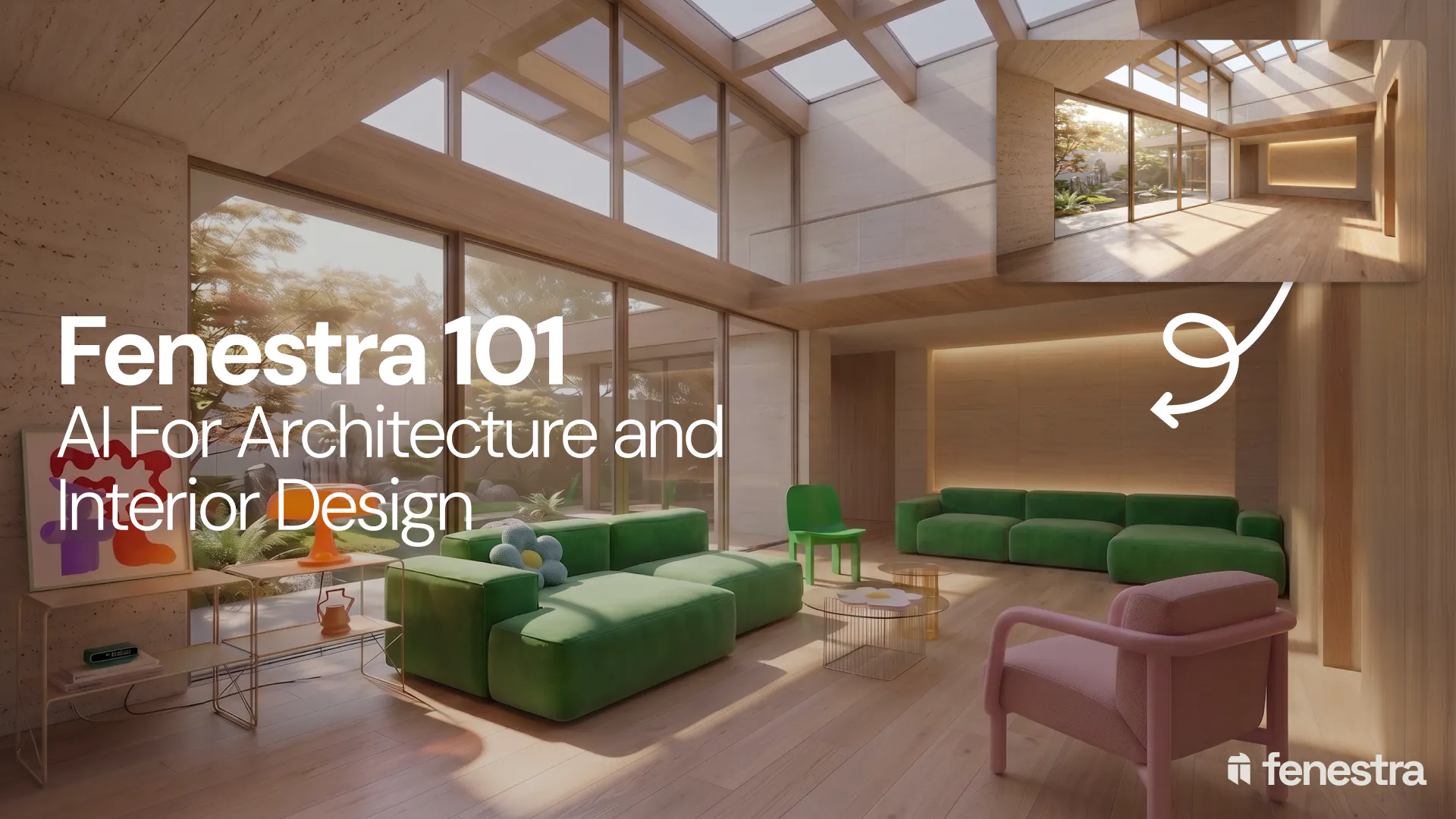
Fenestra 101: Sketch to Render, Virtual Staging and AI Editing for Architects & Interior Designers
In this introductory Fenestra webinar, we walk through the core tools architects and designers can use to turn early ideas into visual concepts. The session covers sketch to render workflows, virtual staging, adding furniture, editing images, removing elements and using AI to quickly explore design directions.
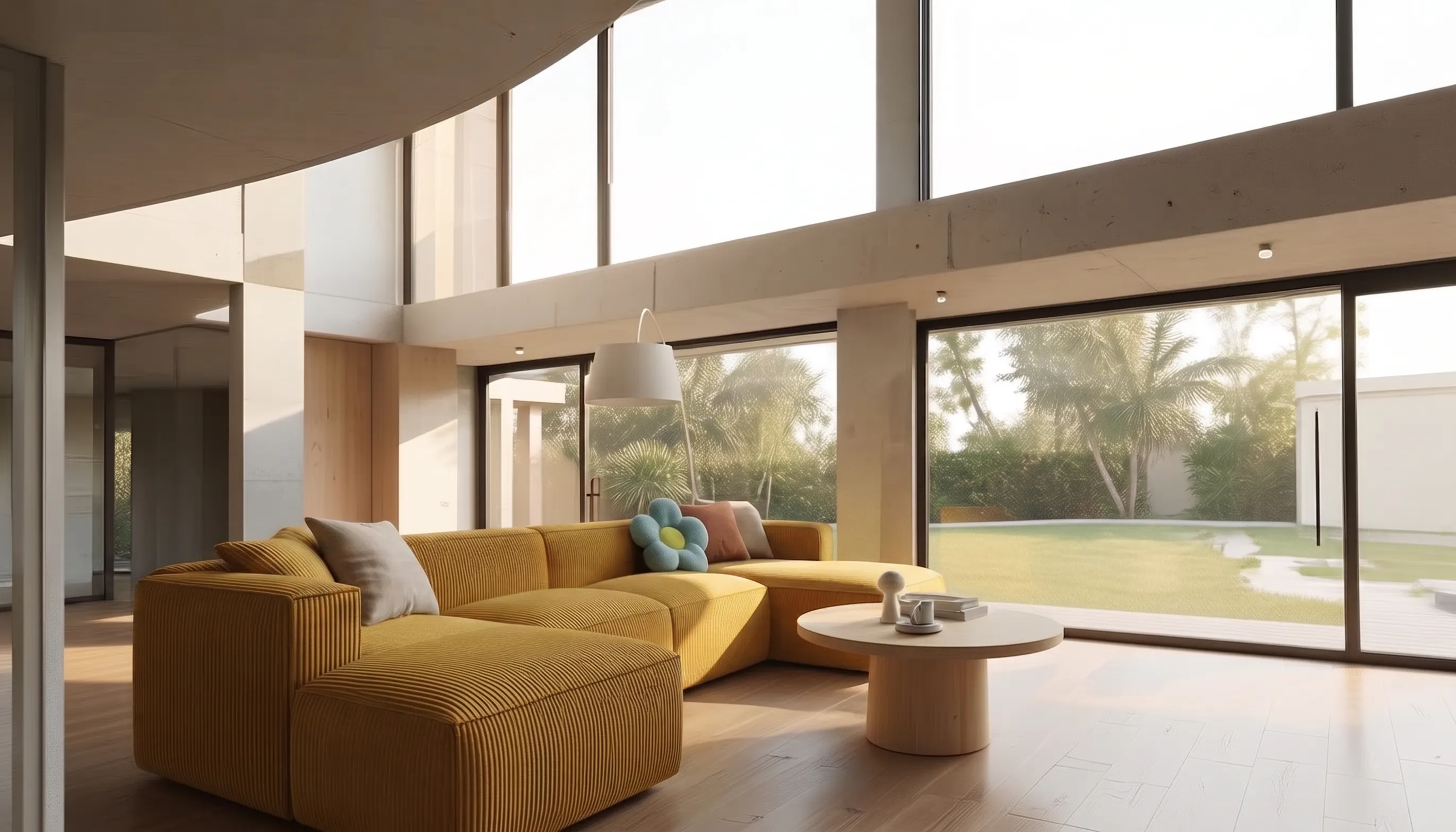
How to Make a Scrolling Website for an Architecture Project
Turn architectural renders and videos into a scrollable project website your client can explore by scrolling.
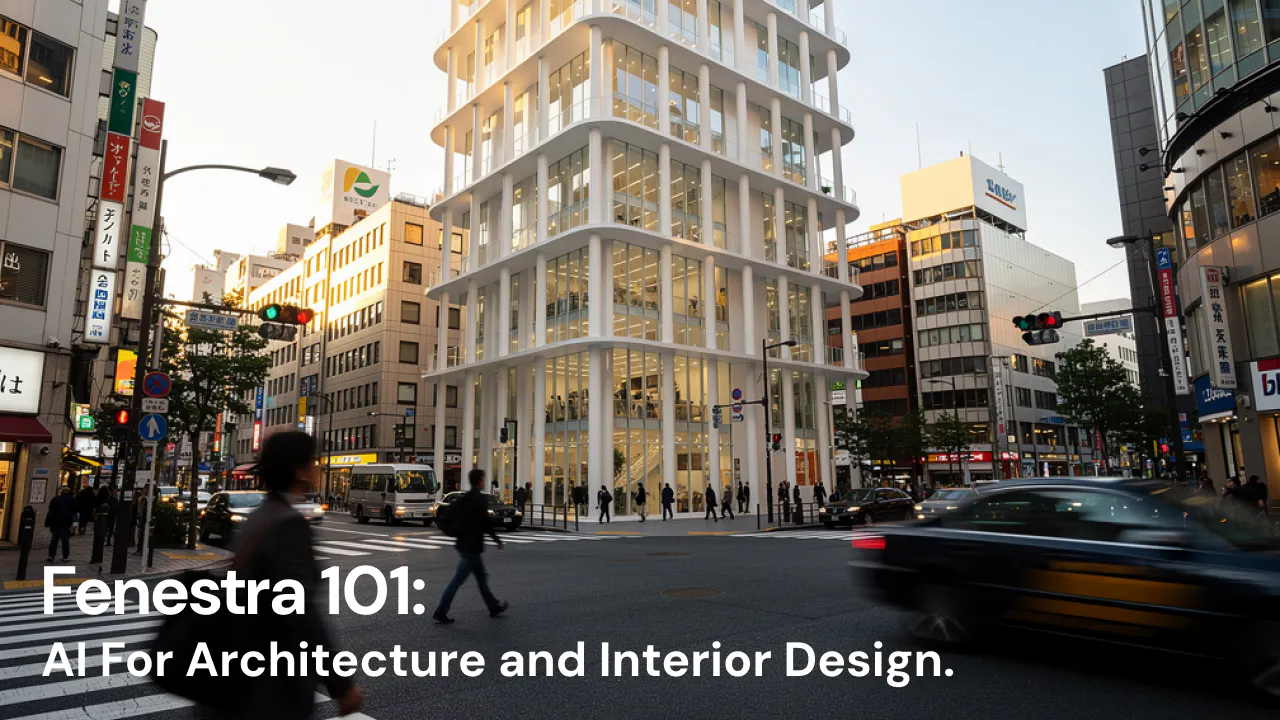
Fenestra 101: Our First Webinar
We're running our first ever live webinar on June 3rd. A hands-on intro to Fenestra for architects and interior designers, covering image generation from prompts, 2D and 3D inputs, video, and where AI actually fits in your practice. 30 seats only.
